 English
From dentures to dental implants: What does the transition involve?
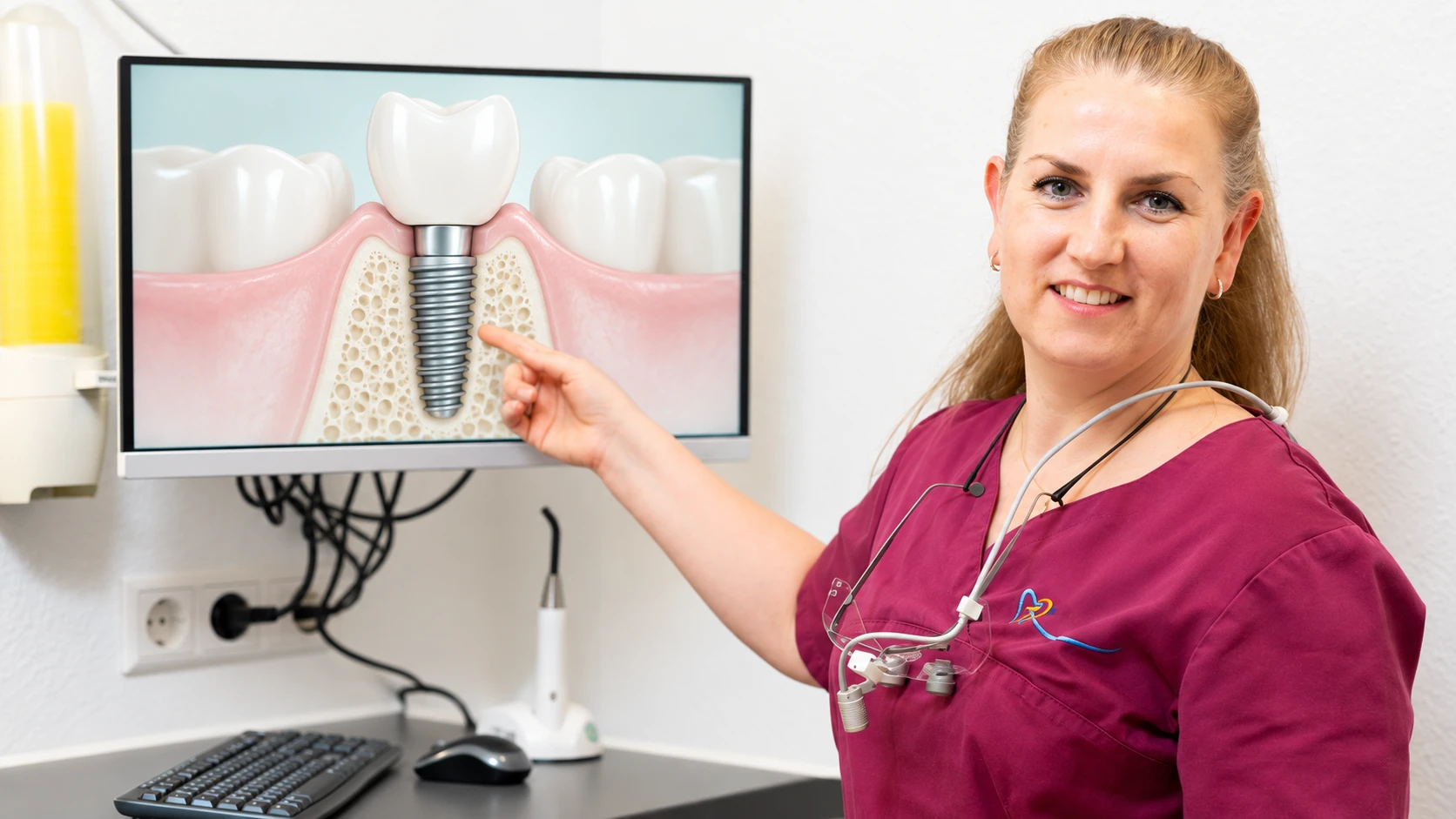
A denture causes pressure, feels loose or no longer provides the support you want when eating. Could implant treatment help? That depends on your individual situation. Before deciding on implants, the first step is to establish why your current denture is causing problems and whether adjusting it or making a new conventional denture could be enough.
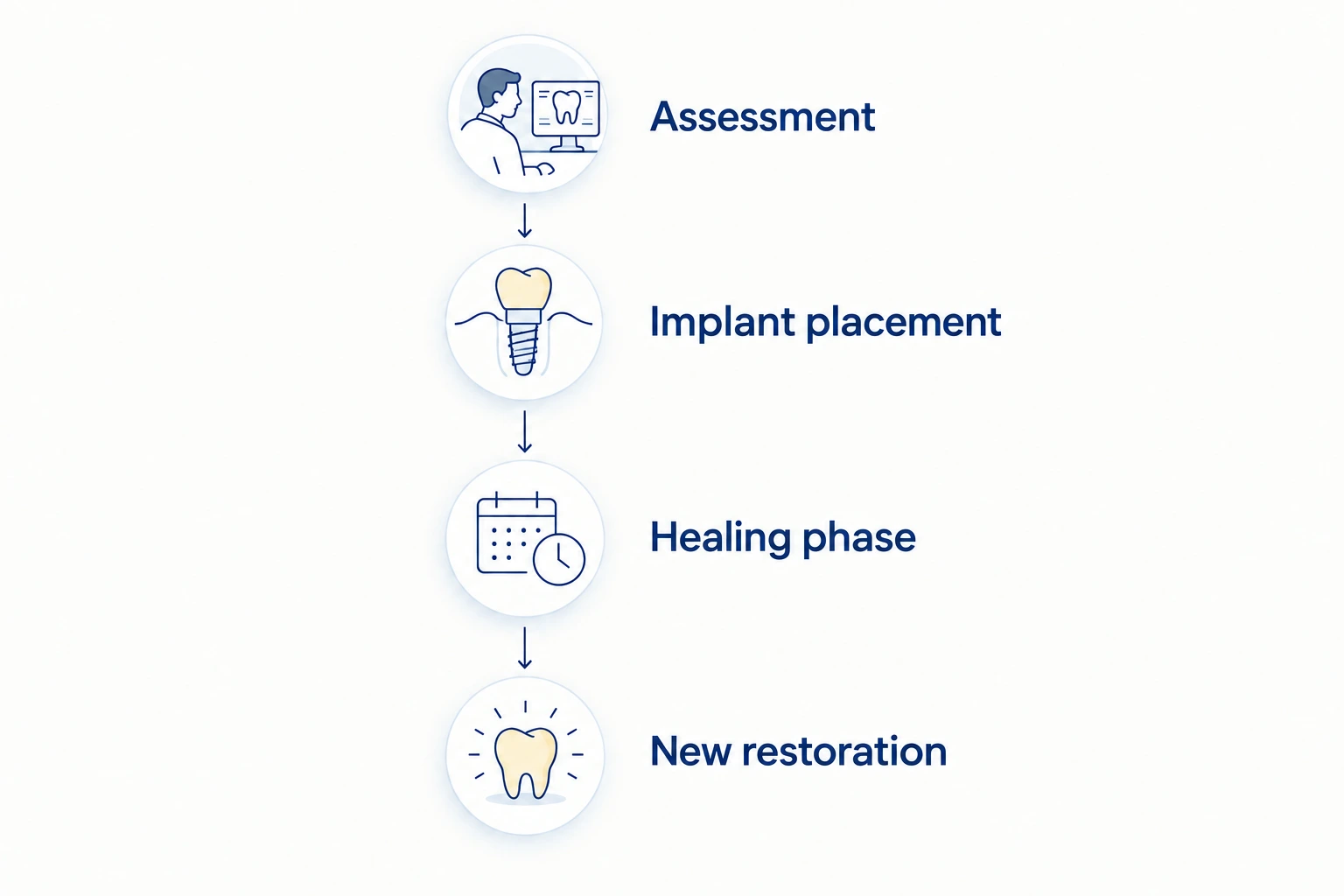
If implants are suitable, the transition involves more than surgery alone. Assessment, temporary teeth, healing and the preparation of your new restoration all need to be planned together. This guide explains the stages and helps you prepare useful questions for your consultation.
The key points at a glance
- Implant-supported does not automatically mean fixed: removable dentures can also be secured on implants.
- Discuss what you will wear between surgery and your final restoration before treatment starts.
- Healing and making the restoration take time. A calendar date is not a substitute for clinical assessment.
- Your treatment plan should explain alternatives, risks, what the costs cover and ongoing care.
The transition at a glance
Find the cause before choosing a treatment
Changes in the jaw and gum tissues, or wear to the denture, can affect its fit. Pain, sore spots or slipping should be assessed. These problems do not automatically mean implants are needed. Depending on the situation, adjustment, relining or a new denture may be appropriate. NHS patient information on dentures
Be specific about what bothers you: chewing, speaking, stability or appearance? When did the problem start? Has the denture already been adjusted? These details make a consultation more useful than a general request for “fixed teeth”.
Stage 1: Assessment and planning
Assessment includes the condition of your mouth and your medical history. Existing teeth, gums, available bone and the intended restoration need to be considered together. The X-rays required are decided individually; a three-dimensional scan is not automatically necessary for every patient.
Bring your current denture, any existing reports and a list of your medicines. Previous treatment plans may also be helpful. Missing records are not a reason to arrange extra tests yourself: first ask the practice what is actually needed.
What should be clear after the consultation: Which options are available, what preliminary treatment might be necessary and which questions remain unanswered? A clear plan leaves room for questions and a decision without time pressure.
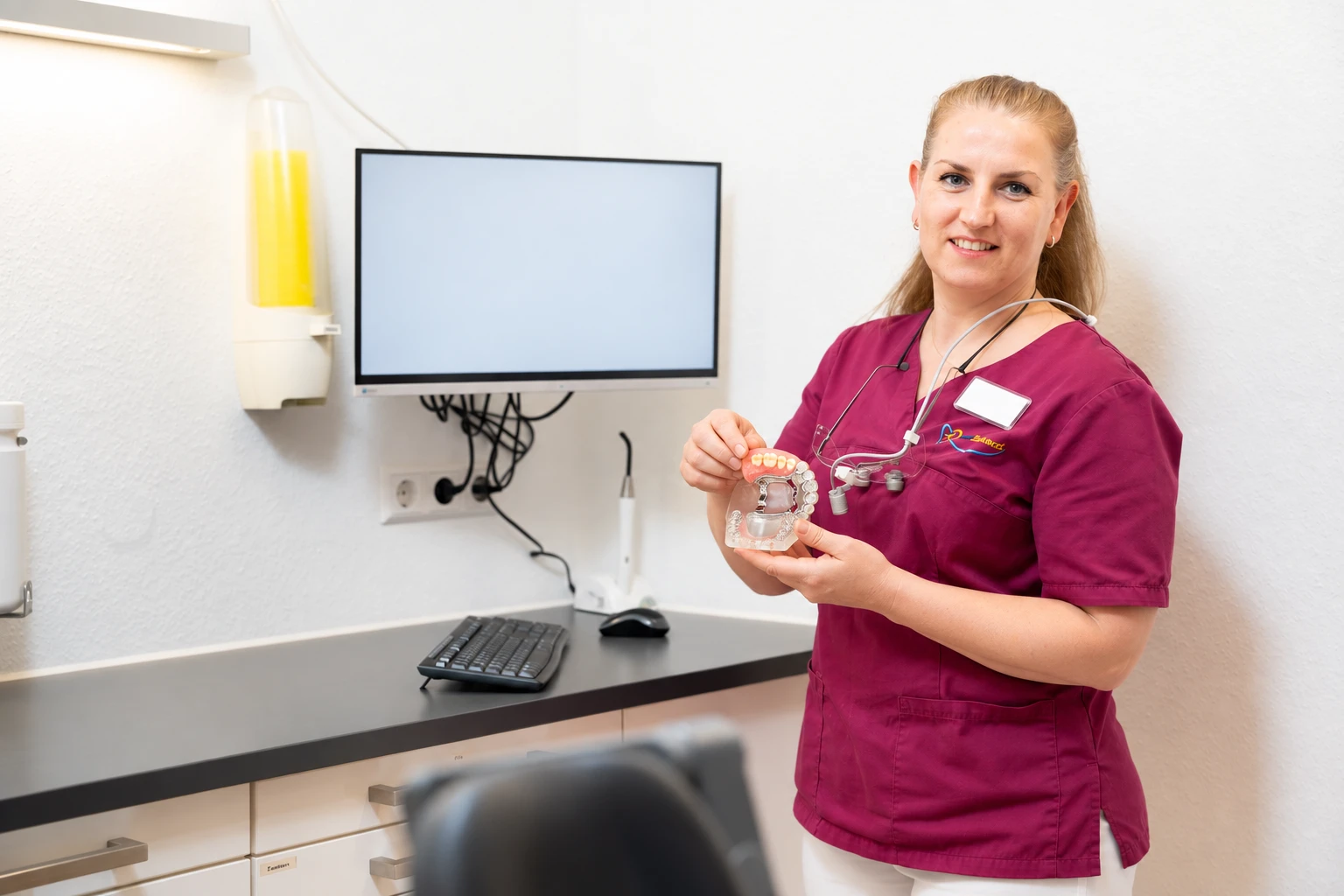
Stage 2: Surgery and temporary teeth
Implants are often placed under local anaesthesia. If there is not enough bone, a bone graft may be needed, either at the same time or before implant placement. This can extend the overall treatment process. Cambridge University Hospitals: bone grafting
Before surgery, ask explicitly: What will I wear afterwards? Sometimes the existing denture can be adjusted and used during treatment. However, a different temporary solution or a period without wearing the denture may be necessary. Continuing to wear the old denture without interruption cannot be promised in every case. Cambridge University Hospitals: dentures after implant surgery
Make a note of the agreed advice on eating, cleaning and wearing your denture. Also ask whom to contact if your temporary teeth cause problems. Do not file down or alter your old denture yourself.
Stage 3: Healing and follow-up appointments
A wound that looks healed on the surface does not necessarily mean an implant is ready for full use. Several months are often allowed for the implant to bond with the bone. Bone grafting, the initial clinical situation and healing progress can affect this period. Cambridge University Hospitals: implant healing
Follow-up appointments allow the team to assess healing and the fit of any temporary restoration. The treatment team decides when the next stages can begin based on your progress, not simply because a set number of weeks has passed.
When planning your appointments: Ask for an estimated timeframe and what might extend it. Mention travel, important personal events and any periods when you will be difficult to reach early on. An autumn consultation does not guarantee a completed restoration by Christmas.
Stage 4: Your new restoration and daily life
Once the conditions are right, the new restoration is made and fitted. Depending on the treatment, this may involve impressions or a scan, try-in appointments and checks of the fit and bite. When you receive your restoration, there should be time to practise handling and cleaning it.
Home care and dental check-ups remain important after treatment is complete. Implants cannot develop tooth decay, but the surrounding tissues can become inflamed. KZBV: implants and aftercare (German)
Ask to be shown which areas need cleaning and which aids suit the design. Let the team know if removing or cleaning the restoration is difficult at home. Ease of handling belongs in the treatment decision, not just at the end of treatment.
Your temporary restoration for the period between surgery and the final restoration should be discussed in advance.
Secure support is not the same as a fixed restoration
Implants are anchored in the jaw and can support different types of replacement teeth. An important everyday distinction is whether you can remove the restoration yourself. Leeds Teaching Hospitals: types of implant restorations
| Question | Removable denture secured on implants | Fixed restoration on implants |
|---|---|---|
| Can I remove it myself? | Yes, following the instructions you receive. | No, not for daily cleaning. |
| How is it cleaned? | Clean the denture outside the mouth and the attachments inside the mouth. | Clean it inside the mouth, including accessible spaces and the areas where it meets the gums. |
| What should I discuss beforehand? | Inserting and removing it, and caring for the attachments. | Reaching all cleaning areas and choosing suitable cleaning aids. |
| Which option is suitable? | This depends on the clinical findings, design and ease of handling. | Clinical findings, design and long-term care matter here too. |
A higher number of implants or the word “fixed” alone does not tell you which treatment to choose. Ask for a clear explanation of the proposed design and its alternatives.
What does “immediately restored” mean?
In suitable circumstances, replacement teeth can be attached to implants early in treatment. This is not appropriate for every clinical situation. It also does not automatically mean that the final restoration is ready immediately or that it can be used without restrictions. KZBV: healing and immediate restoration (German)
Ask specific questions about such offers: Is the proposed restoration temporary or final? What conditions must be met? What restrictions apply afterwards? What is the alternative if early loading is not possible?
Seven questions for your consultation
- Why does my current denture no longer fit well, and can it be improved?
- Which options suit my clinical situation, including options without implants?
- Will the new restoration be removable or fixed?
- What temporary solution is planned, and might I need a break from wearing my denture?
- Which risks and possible additional treatment stages are relevant to me?
- What does the cost estimate include, such as temporary teeth, laboratory work and aftercare?
- How will I clean the restoration, and what check-ups or future repairs should I expect?
When comparing costs, compare the same set of services. Patients from Switzerland should also clarify their individual reimbursement with their own insurer. A general price or reimbursement statement does not replace that check.
A personal consultation in Lörrach-Stetten
Would you like to understand the options for your existing denture? You can request a consultation at MeinZahnarzt Lörrach-Stetten and bring any existing records with you. The practice is in Lörrach, Germany, close to Basel and the Swiss border.
Request a consultation (German contact page) · Call +49 7621 3533
More about deciding on implants (German)
This guide provides general information. It does not replace an individual examination or a discussion of your treatment and its risks with your dental team.
Frequently asked questions
Does an old denture always need to be replaced with implants?
No. The cause of the problem needs to be assessed first. An adjusted or newly made denture may also be a suitable option.
Can I keep my existing denture during treatment?
Possibly, but it is not guaranteed. The practice needs to assess whether it can be adjusted and when you may wear it. This is why temporary teeth should be discussed during the initial planning consultation.
Do implants automatically mean teeth that I cannot remove?
No. Implants can also secure removable dentures. Before deciding, ask to be shown the type of restoration being proposed.
How many appointments will I need in total?
This can only be estimated meaningfully after an assessment. Ask for a plan that includes not just surgery, but also preliminary treatment, follow-ups, try-ins and the fitting of your restoration.